• WORKS
  • ABOUT
  • WRITING
  • CONTACT
Menu

Stephen RG Bennett

  • WORKS
  • ABOUT
  • WRITING
  • CONTACT

SIGN UP FOR NEWSLETTER HERE

Artist Melanie Crean, shape and NYC criminal justice

April 23, 2022

This is the third blog on my Clore Fellowship/Wellcome Trust sponsored study visit to the USA. See the others here.

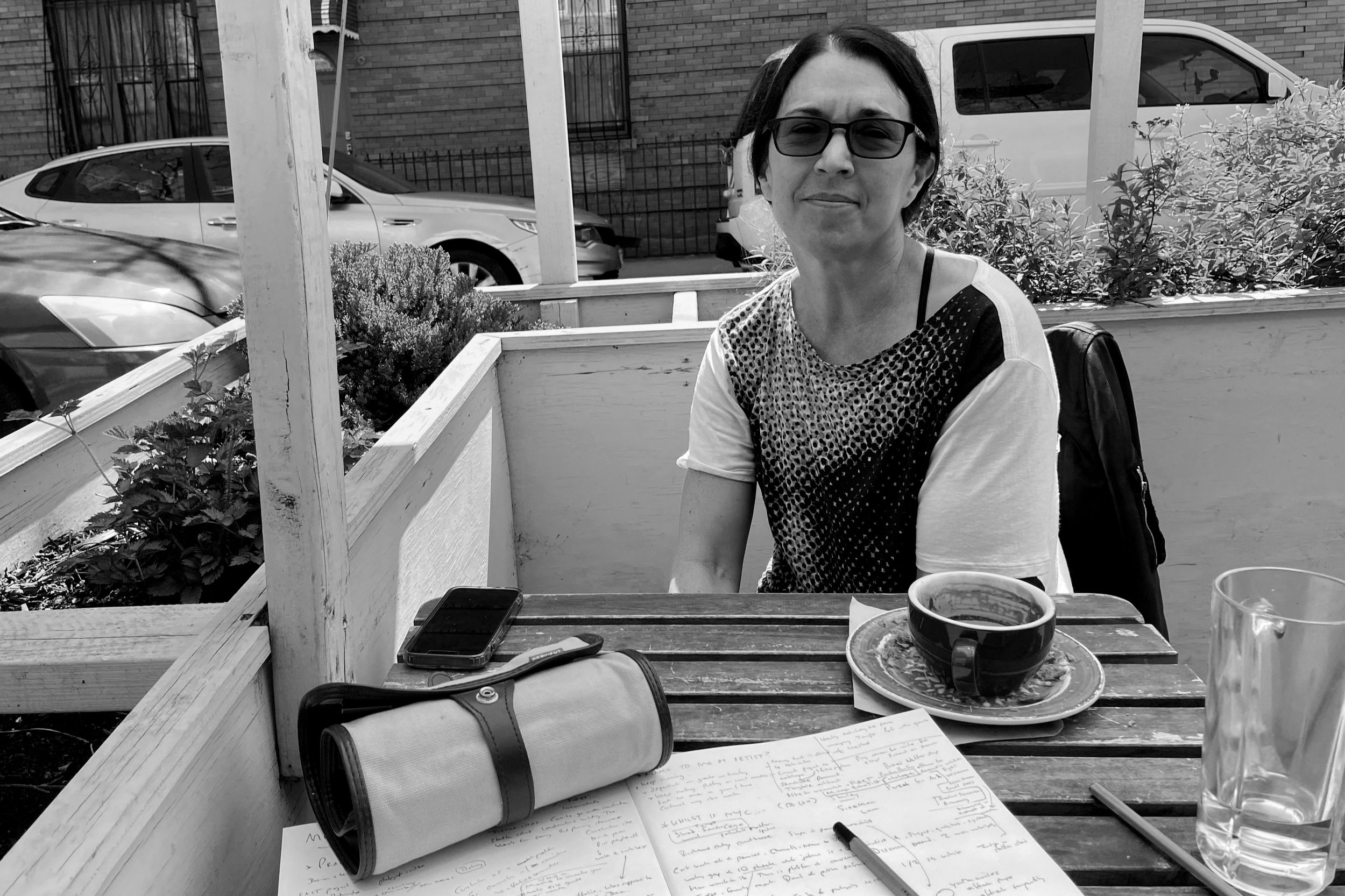
I interviewed Melanie about her practice and her engagement in the New York City government’s Public Artist in Residence (PAIR) programme. Melanie’s work as part of PAIR explores the intersection of architecture, symbols and criminal justice outcomes. She is looking through this lens at the restoration of the Staten Island justice centre. The visual language of the triangle, with its strong associations with hierarchy, is both present in the physical architecture of the courthouse (see image below) and the culture of the institution and the justice system. An alternative symbol for Melanie is the circle, manifest in youth justice circles she runs young people involved in the criminal justice system. Melanie hopes to run one of these sessions at the Connecticut quarry which sources the stone for the restoration. Melanie’s practice presents a powerful approach to bringing materiality and shape to more abstract notions of justice and criminal justice policy. These are a fascinating set of insights to consider as part of my research on the role of art in policy.

Melanie explained how the PAIR programme was supported in partnership by NYC Department of Cultural Affairs (DCLA) and the Department for Design and Construction (DDC). DCLA provided a strong central, coordination and conceptual role, whilst DDC were the lead policy department for Melanie’s placement. Funding is split 50:50. Both organisations were part of the recruitment panel, and Melanie now benefits from weekly support meetings with them both. The scheme lasts 12 months which is very tight (especially if relying on slow procurement processes). The first 3-4 months focus on interviews, shadowing and research. The general intention is that an artwork is completed by the end of the placement, and that work can remain in situ for beyond the 12 months.

Finally, Melanie provided some interesting advice to me as an artist: focus on making and exhibiting work.

Check out Melanie’s amazing work here, and more information on the Public Artist in Residence scheme here.

***

I am the Wellcome Trust sponsored Clore 16 Fellow. In 2022 as part of this Fellowship I travelled to New York, Santa Fe and Los Angeles.I met the artist-led entertainment space innovating how audiences engage with evidence, an artist pushing the boundaries of interspecies collaboration, and the climate team in the New York City Government who brought artists in to transform the cuture of the workplace. Read about them and others here.

In Clore Fellowship: USA Tags Melanie crean, Public Artist in Residence, NYC, PAIR, DCLA, DDC, architecture, Clore Fellowship
← Merz style political ceramics with Kahlil Robert IrvingLability, transference, activation energy: conceptualising the impact of art in policy (Article 5/6) →

Latest Posts

Featured
Evaluating Glass House (Article 6/6)
October 25, 2022
Evaluating Glass House (Article 6/6)
October 25, 2022

Reviewing the impact and value of the September 2021 Glass House exhibition as an examination of art and policy and a case study of practice-based research

Read more →
October 25, 2022
Art about bureaucracy relating to art, New York
July 11, 2022
Art about bureaucracy relating to art, New York
July 11, 2022

An interview with the artist Julia Weist who has explored the relationship between art and bureaucracy whilst working as an artist in residence in the New York City Government

Read more →
July 11, 2022
Public records, NYPD surveillance, performance art
May 27, 2022
Public records, NYPD surveillance, performance art
May 27, 2022

An interview with Kameron Neal, a Brooklyn based artist who is working with the New York City government to reclaim and repurpose NYPD’s pervasive and invasive surveillance footage from the 1950s-90s.

Read more →
May 27, 2022
Meow Wolf, evidence, policy
May 13, 2022
Meow Wolf, evidence, policy
May 13, 2022

What can people involved in evidence and policy learn from a neon soaked arts-led entertainment space in the New Mexico desert? I visited Meow Wolf to find out.

Read more →
May 13, 2022
Art at the New York Mayor's Office for Sustainability
May 4, 2022
Art at the New York Mayor's Office for Sustainability
May 4, 2022

Interview with Janet Zweig, a New York based artist who is part of the NYC Public Artist in Residence programme and worked with the then Mayor’s Office for Sustainability, where a key contact was Kate Gouin, who also kindly made time for a discussion.

Read more →
May 4, 2022
Interspecies collaboration with Tomas Saraceno
April 25, 2022
Interspecies collaboration with Tomas Saraceno
April 25, 2022

Interspecies collaboration with Tomas Saraceno at The Shed gallery in New York

Read more →
April 25, 2022
Merz style political ceramics with Kahlil Robert Irving
April 23, 2022
Merz style political ceramics with Kahlil Robert Irving
April 23, 2022

Some notes from an impromptu visit to Kahlil Robert Irving’s show at the New York Museum of Modern Art (MoMA).

Read more →
April 23, 2022
Artist Melanie Crean, shape and NYC criminal justice
April 23, 2022
Artist Melanie Crean, shape and NYC criminal justice
April 23, 2022

Interview with Melanie Crean, a New York based artist who is part of the NYC Public Artist in Residence programme, working at the intersection of architecture, criminal justice and shape.

Read more →
April 23, 2022
Lability, transference, activation energy: conceptualising the impact of art in policy (Article 5/6)
February 14, 2022
Lability, transference, activation energy: conceptualising the impact of art in policy (Article 5/6)
February 14, 2022

Artists and funders often ask how artwork can have a policy impact. This article sets out thoughts with reference to three scientific concepts: lability, transference and activation energy.

Read more →
February 14, 2022
THE ART-POLICY MATRIX II (ARTICLE 4/6)
May 13, 2021
THE ART-POLICY MATRIX II (ARTICLE 4/6)
May 13, 2021

This article, the fourth in a series on the role of art in policymaking, situates real life artworks in a theoretical art-policy matrix. It starts by describing two case studies - Blue Planet II and The Museum of Extraordinary Objects - in more detail, before outlining nineteen other artworks, all which, in some way, link to policy.

Read more →
May 13, 2021

© Stephen RG Bennett
Subscribe · Portfolio