• WORKS
  • ABOUT
  • WRITING
  • CONTACT
Menu

Stephen RG Bennett

  • WORKS
  • ABOUT
  • WRITING
  • CONTACT

SIGN UP FOR NEWSLETTER HERE

Source: https://www.theguardian.com/science/2017/apr/17/receding-glacier-causes-immense-canadian-river-to-vanish-in-four-days-climate-change

Source: https://www.theguardian.com/science/2017/apr/17/receding-glacier-causes-immense-canadian-river-to-vanish-in-four-days-climate-change

Climate change research: memory, adaptation

April 22, 2017

Receding glaciers cause a river to disappear in the Guardian; image from the original story above.

This prompted me to think about how humans think about and remember a changing climate. it is not so often that a big change (a river disappearing) happens so often. Here are some interesting articles about memory and climate change. This long form from New Yorker (from 2003) on ice memory. This looks a great article but behind a paywall "Place, Memory, Climate Change". And another, "Climate Change and Memory":

Still thinking about human responses to climate change, but on a macro level, here are some interesting visuals of adaptive capacity. First, South East Asia, image below.
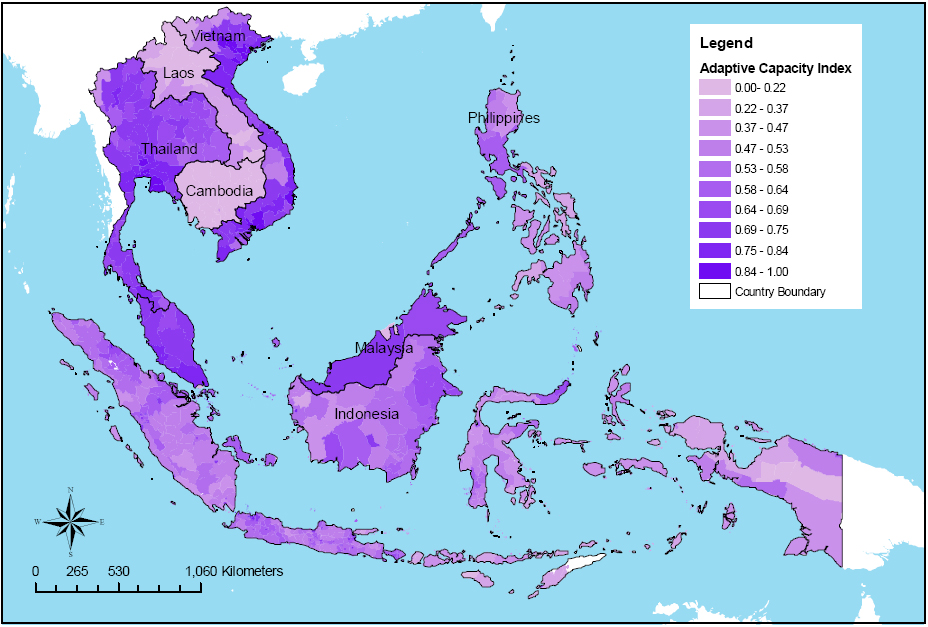
Adaptive capacity in South East Asia. Source: http://www.preventionweb.net/files/7874_asiaadaptivecapacityinde.jpg

Adaptive capacity in South East Asia. Source: http://www.preventionweb.net/files/7874_asiaadaptivecapacityinde.jpg

Adaptive capacity in Europe below, from here. Thought there appeared to be a correlation to economic development, so have placed it next to a European GDP per capita map. Does seem to be a spatial correlation.

Adaptive capacity (left) and GDP per capita (right). Sources: http://espon-terrevi.t33.it/wp-content/uploads/2014/02/Combined-adaptive-capacity-to-climate-change-2011.jpg(left) http://ec.europa.eu/eurostat/statistics-explained/index.php/File:Gross_d…

Adaptive capacity (left) and GDP per capita (right). Sources: http://espon-terrevi.t33.it/wp-content/uploads/2014/02/Combined-adaptive-capacity-to-climate-change-2011.jpg(left) http://ec.europa.eu/eurostat/statistics-explained/index.php/File:Gross_domestic_product_(GDP)_per_inhabitant_in_purchasing_power_standard_(PPS)_in_relation_to_the_EU-28_average,_by_NUTS_2_regions,_2014_(%C2%B9)_(%25_of_the_EU-28_average,_EU-28_%3D_100)_RYB2016.png (right)
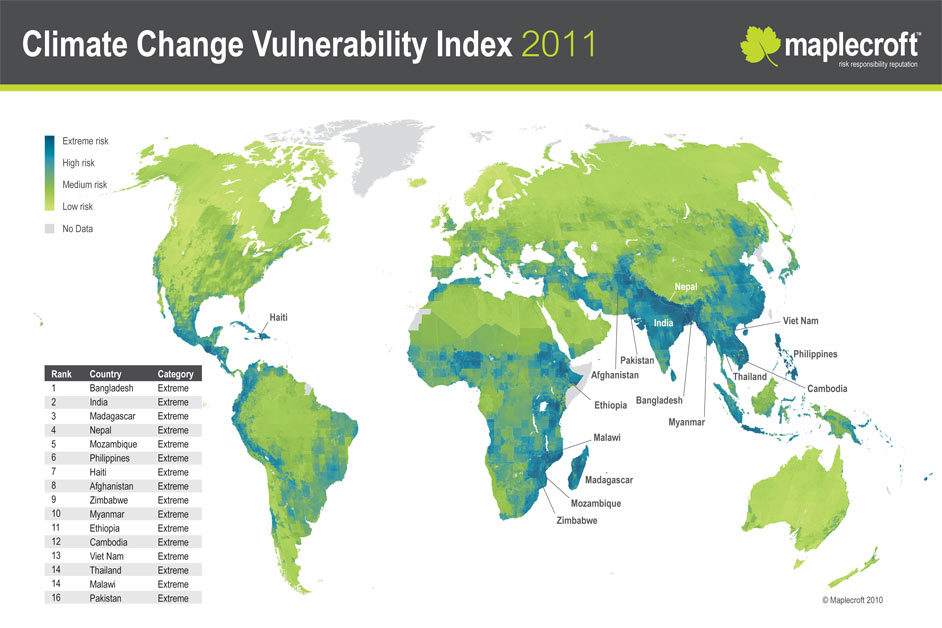
A slightly different, but related, map of climate change vulnerability. Original report is here, and then we have the Guardian analysis of it here, New Scientist view here, a good blog post here.

Map of climate change vulnerability. Source: https://static.guim.co.uk/sys-images/Environment/Pix/columnists/2010/10/21/1287657605700/Climate-Change-Vulnerabil-008.jpg

Map of climate change vulnerability. Source: https://static.guim.co.uk/sys-images/Environment/Pix/columnists/2010/10/21/1287657605700/Climate-Change-Vulnerabil-008.jpg

In Technical art resources Tags Climate change research: memory, adaptation, 2017, Climate, Memory, Climate adaptation, Data, map, Vulnerability
← Planet surfaces & our environment (ahead of Lumen Residency)Research on map projections (ahead of Imperial Science Festival) →

Latest Posts

Featured
Evaluating Glass House (Article 6/6)
October 25, 2022
Evaluating Glass House (Article 6/6)
October 25, 2022

Reviewing the impact and value of the September 2021 Glass House exhibition as an examination of art and policy and a case study of practice-based research

Read more →
October 25, 2022
Art about bureaucracy relating to art, New York
July 11, 2022
Art about bureaucracy relating to art, New York
July 11, 2022

An interview with the artist Julia Weist who has explored the relationship between art and bureaucracy whilst working as an artist in residence in the New York City Government

Read more →
July 11, 2022
Public records, NYPD surveillance, performance art
May 27, 2022
Public records, NYPD surveillance, performance art
May 27, 2022

An interview with Kameron Neal, a Brooklyn based artist who is working with the New York City government to reclaim and repurpose NYPD’s pervasive and invasive surveillance footage from the 1950s-90s.

Read more →
May 27, 2022
Meow Wolf, evidence, policy
May 13, 2022
Meow Wolf, evidence, policy
May 13, 2022

What can people involved in evidence and policy learn from a neon soaked arts-led entertainment space in the New Mexico desert? I visited Meow Wolf to find out.

Read more →
May 13, 2022
Art at the New York Mayor's Office for Sustainability
May 4, 2022
Art at the New York Mayor's Office for Sustainability
May 4, 2022

Interview with Janet Zweig, a New York based artist who is part of the NYC Public Artist in Residence programme and worked with the then Mayor’s Office for Sustainability, where a key contact was Kate Gouin, who also kindly made time for a discussion.

Read more →
May 4, 2022
Interspecies collaboration with Tomas Saraceno
April 25, 2022
Interspecies collaboration with Tomas Saraceno
April 25, 2022

Interspecies collaboration with Tomas Saraceno at The Shed gallery in New York

Read more →
April 25, 2022
Merz style political ceramics with Kahlil Robert Irving
April 23, 2022
Merz style political ceramics with Kahlil Robert Irving
April 23, 2022

Some notes from an impromptu visit to Kahlil Robert Irving’s show at the New York Museum of Modern Art (MoMA).

Read more →
April 23, 2022
Artist Melanie Crean, shape and NYC criminal justice
April 23, 2022
Artist Melanie Crean, shape and NYC criminal justice
April 23, 2022

Interview with Melanie Crean, a New York based artist who is part of the NYC Public Artist in Residence programme, working at the intersection of architecture, criminal justice and shape.

Read more →
April 23, 2022
Lability, transference, activation energy: conceptualising the impact of art in policy (Article 5/6)
February 14, 2022
Lability, transference, activation energy: conceptualising the impact of art in policy (Article 5/6)
February 14, 2022

Artists and funders often ask how artwork can have a policy impact. This article sets out thoughts with reference to three scientific concepts: lability, transference and activation energy.

Read more →
February 14, 2022
THE ART-POLICY MATRIX II (ARTICLE 4/6)
May 13, 2021
THE ART-POLICY MATRIX II (ARTICLE 4/6)
May 13, 2021

This article, the fourth in a series on the role of art in policymaking, situates real life artworks in a theoretical art-policy matrix. It starts by describing two case studies - Blue Planet II and The Museum of Extraordinary Objects - in more detail, before outlining nineteen other artworks, all which, in some way, link to policy.

Read more →
May 13, 2021

© Stephen RG Bennett
Subscribe · Portfolio